A fruit is a fare paid to an animal for carrying a seed away from its parent. Each card pairs one fruit with its carrier: the lure is what the plant offers, the ride is how the seed travels. Open the evidence line to see how solid the pairing is.
Written Wed 11 Nov 2026 (week 46). 28 pairings. Pictures drawn by Gemini through Antigravity.
These fruits were built for giants that died out about 12,000 years ago. The fruit is still here; the animal is not. Daniel Janzen and Paul Martin named the pattern in 1982: a fruit too big, too tough or too plentiful for anything now alive in its forest.
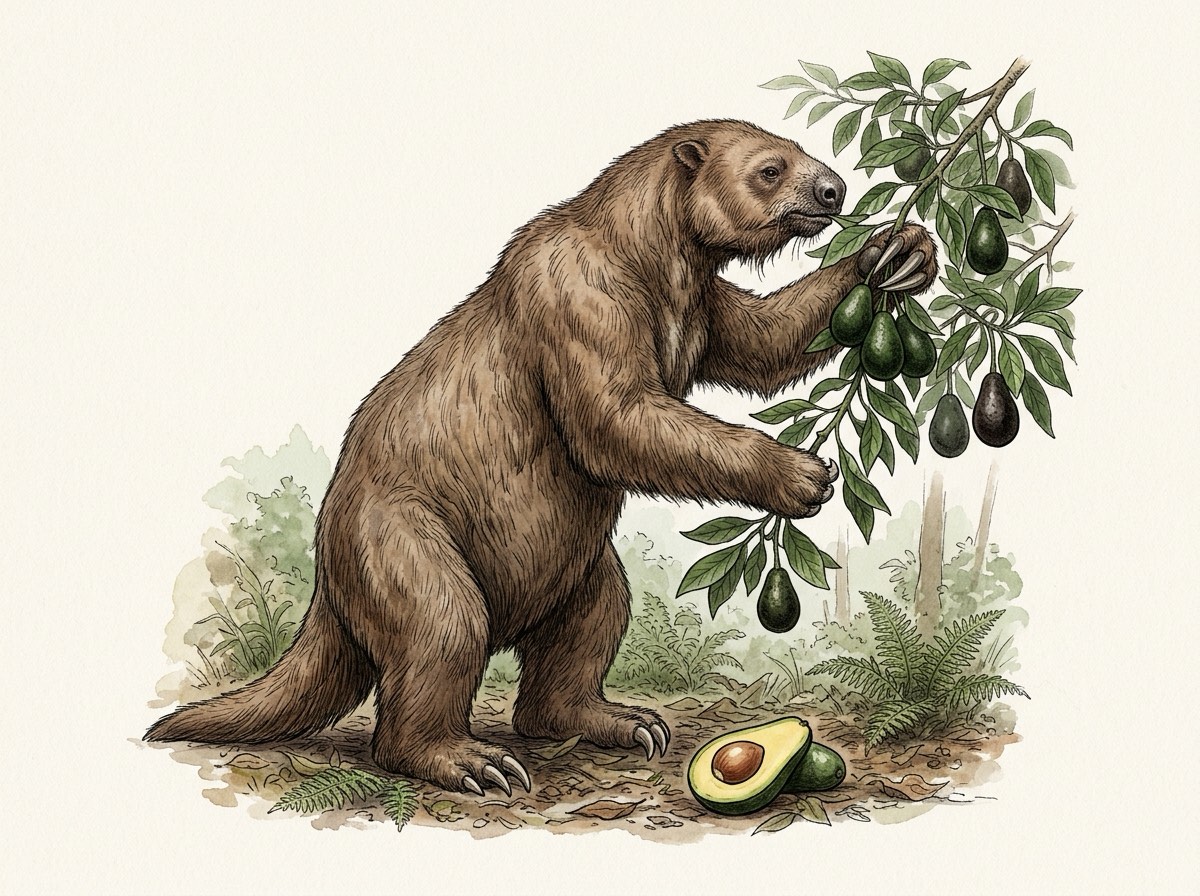
Avocado
carried by Giant ground sloths and gomphotheres
Lure Oily flesh around one huge seed, too big for any living wild animal in its range to swallow.
Ride Swallowed whole, the seed left in a dung pile far from the parent tree.
Inferred from the fruit · evidence
Janzen and Martin's 1982 argument from the fruit's shape; no avocado seed has been found in fossil dung. People took over the job.
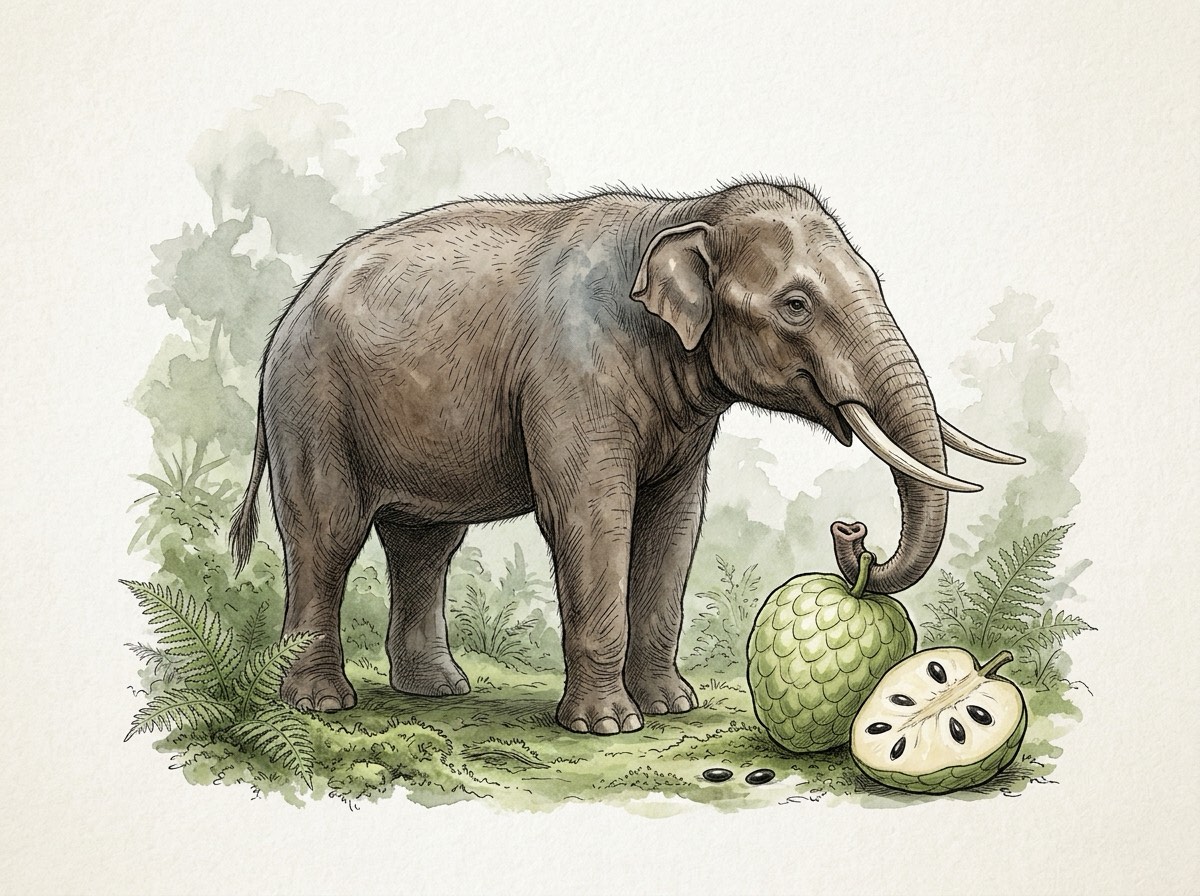
Cherimoya
carried by Gomphotheres and ground sloths
Lure A heavy, custard-sweet green fruit that drops to the ground when ripe, full of hard black seeds.
Ride Eaten off the ground whole; the toxic seeds pass through unchewed.
Inferred from the fruit · evidence
The Annona fruits are on Janzen and Martin's list of Neotropical anachronisms. Today the fruit mostly rots under the tree unless people, or livestock, carry it.
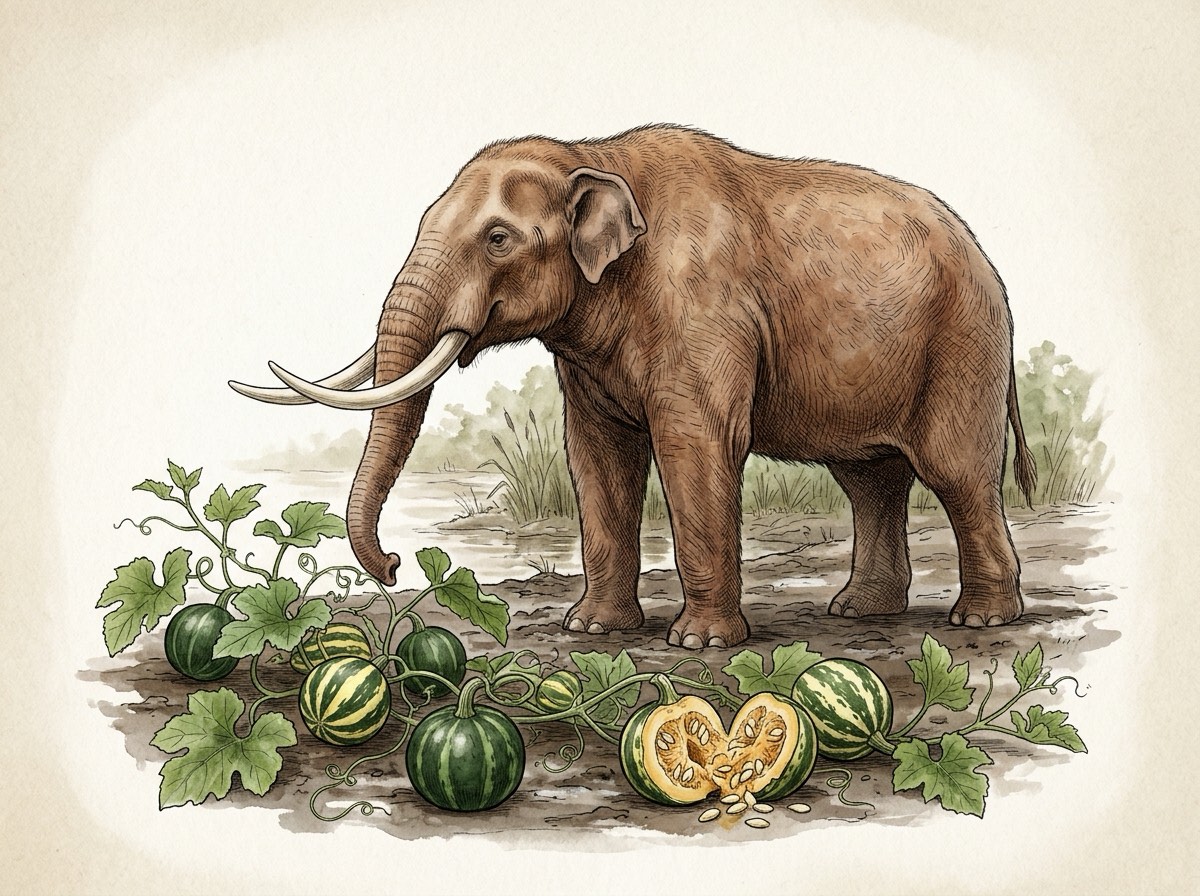
Wild squash and pumpkin
carried by Mastodons
Lure A tough, bitter gourd. Big animals taste bitterness poorly, small ones are put off.
Ride Swallowed whole; seeds dropped in dung on open, trampled ground, where gourds grow best.
Tested or observed · evidence
Intact squash seeds sit in 14,000-year-old mastodon dung at Page-Ladson, Florida. Kistler and colleagues (2015) found wild squashes shrank back after the giants went; farming saved the sweet ones.
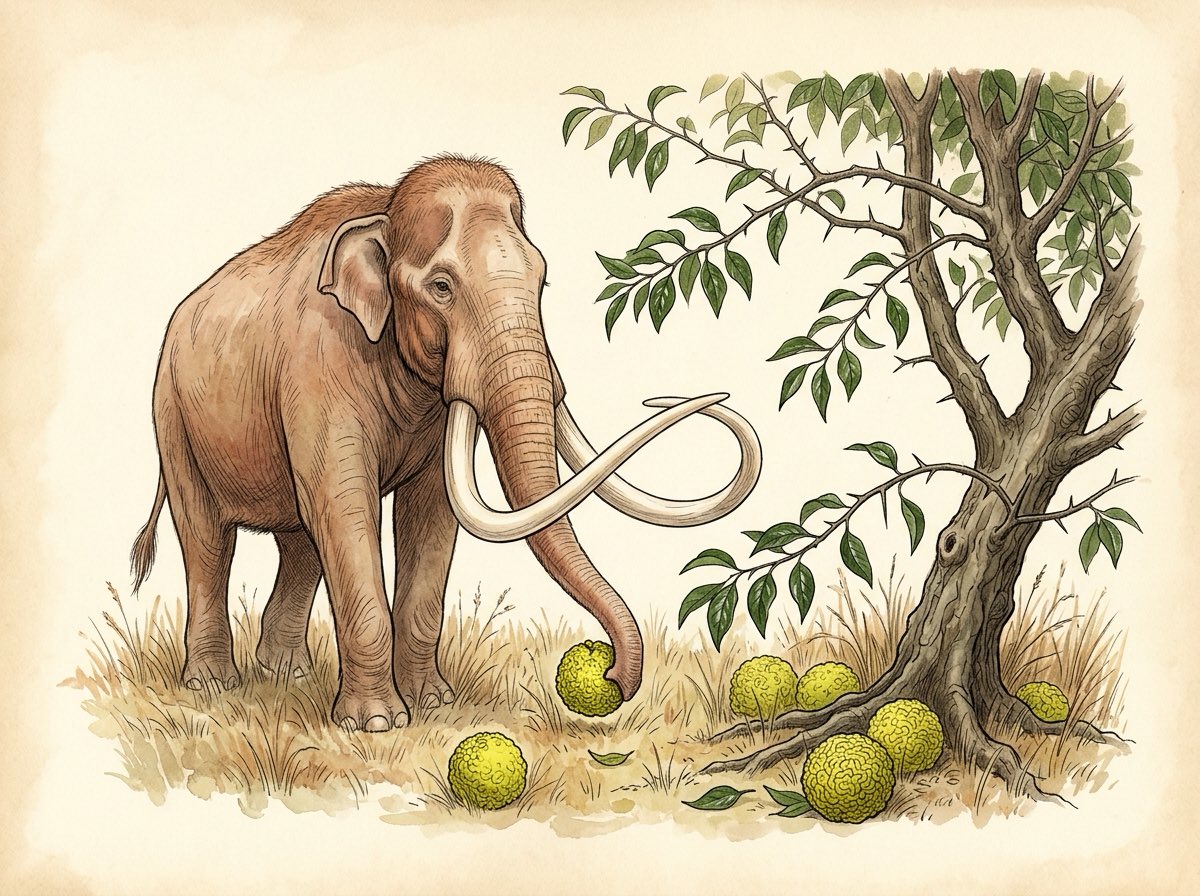
Osage orange
carried by Mammoths, mastodons, ground sloths
Lure A grapefruit-sized green ball that smells of citrus and falls with a thud.
Ride None today: the balls pile up and rot under the tree. Horses, brought back by people, do eat them.
Inferred from the fruit · evidence
Inferred from the uneaten fruit and from the tree's range, which had shrunk to a patch of Texas and Oklahoma before settlers planted it as hedges.
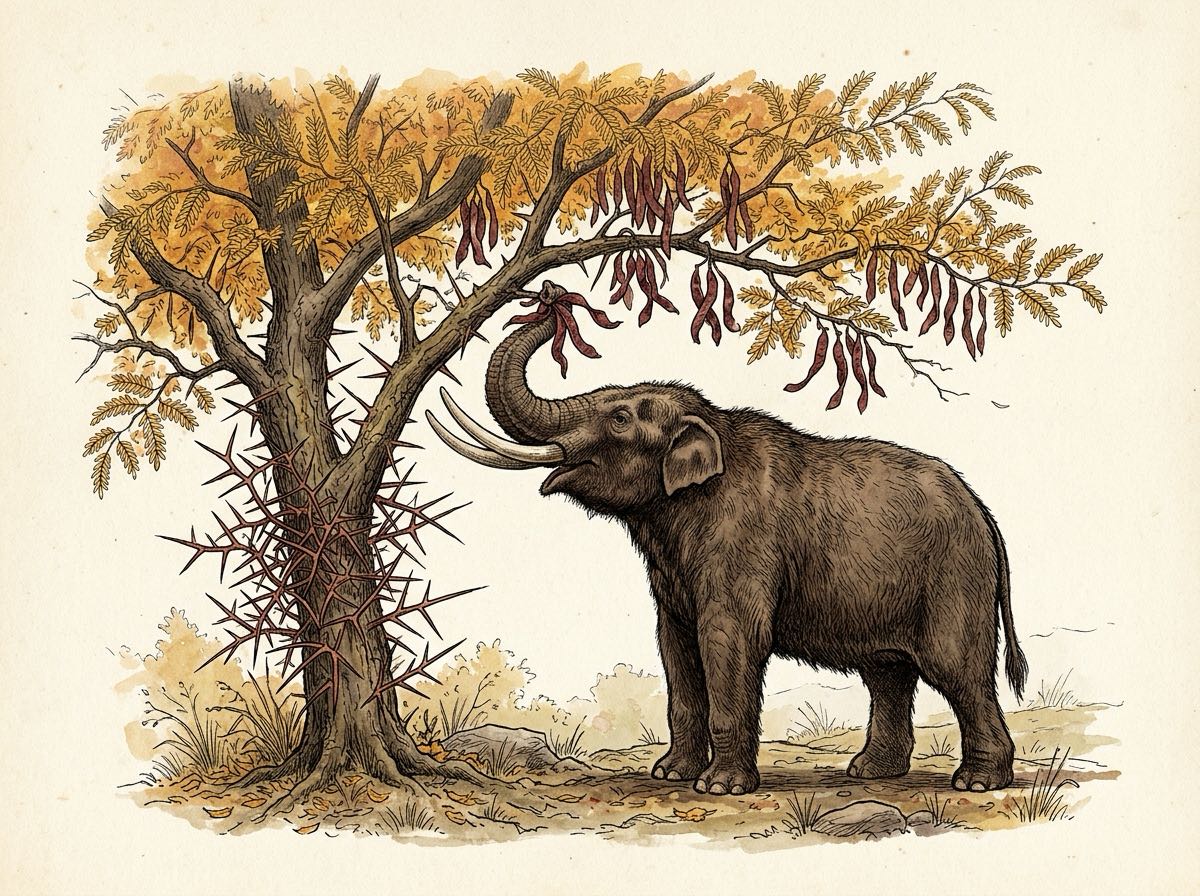
Honey locust
carried by Mastodons
Lure Foot-long pods with sweet pulp around stone-hard seeds. The trunk is armoured with thorns up to the height of an elephant's reach.
Ride Pods chewed for sugar; the seeds need their coat scratched, as a gut or a molar does, to sprout.
Inferred from the fruit · evidence
The thorns guard against a browser that no longer exists. Cattle and deer now spread the seeds.
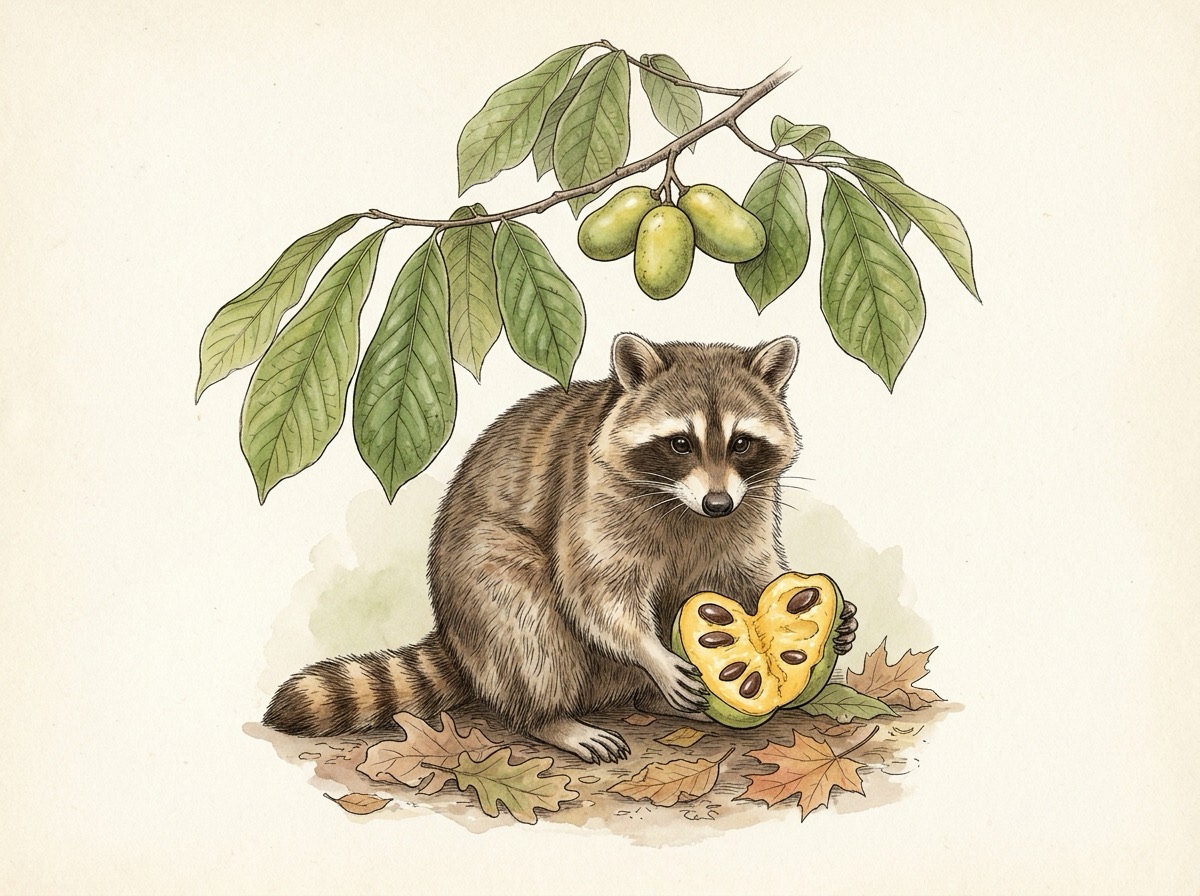
Pawpaw
carried by Mastodons and other large mammals
Lure North America's largest native fruit: green, mango-soft, banana-scented, with bean-sized seeds.
Ride Today raccoons, opossums, foxes and bears move a few seeds; the tree mostly spreads by root suckers.
Inferred from the fruit · evidence
A cherimoya relative stranded in the temperate zone. Its patchy range along rivers and old trails suggests people carried it after the big animals went.
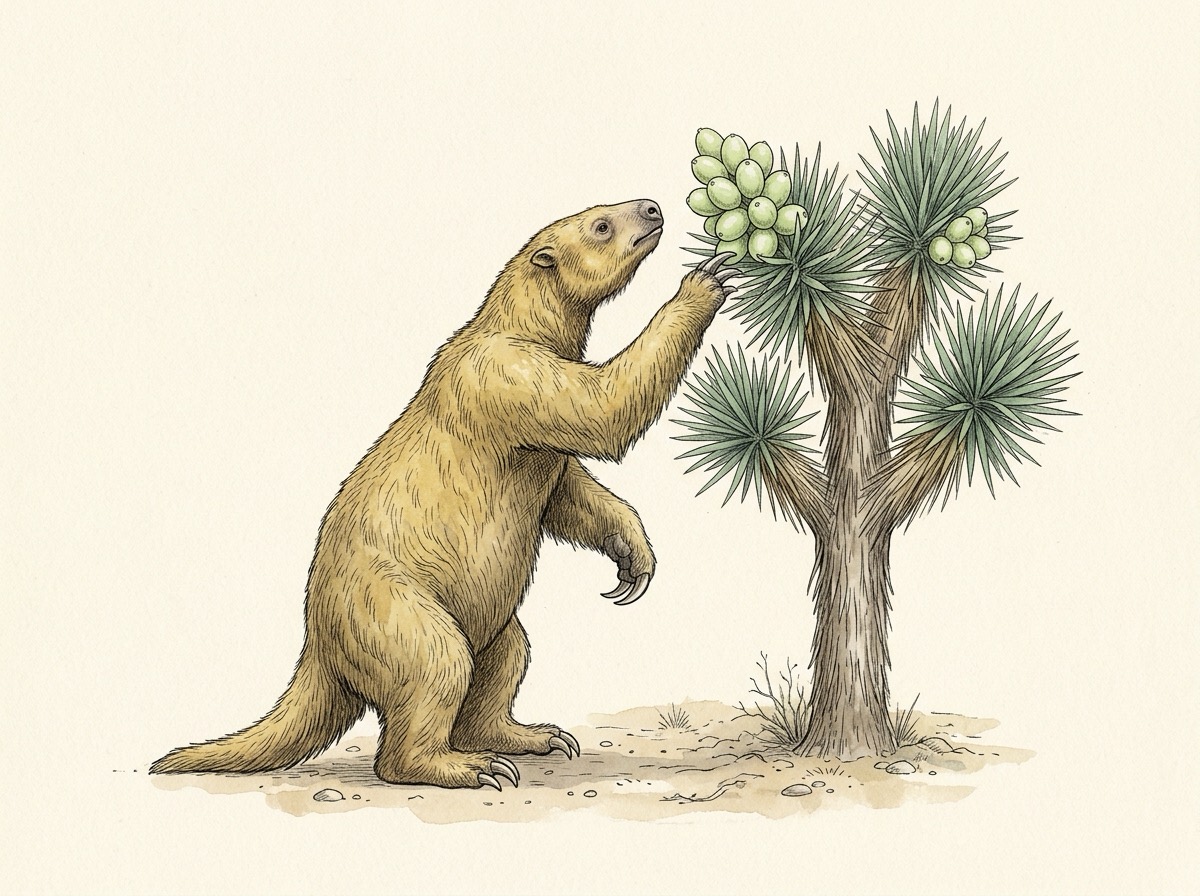
Joshua tree
carried by Shasta ground sloth
Lure Spongy, fleshy green fruits held high and never splitting open on their own.
Ride The sloth ate the fruit and walked. Now ground squirrels and kangaroo rats cache seeds a few metres away, too slowly to follow a warming climate.
Tested or observed · evidence
Joshua tree seeds and leaves are in 11,000- to 30,000-year-old sloth dung from Gypsum Cave, Nevada.
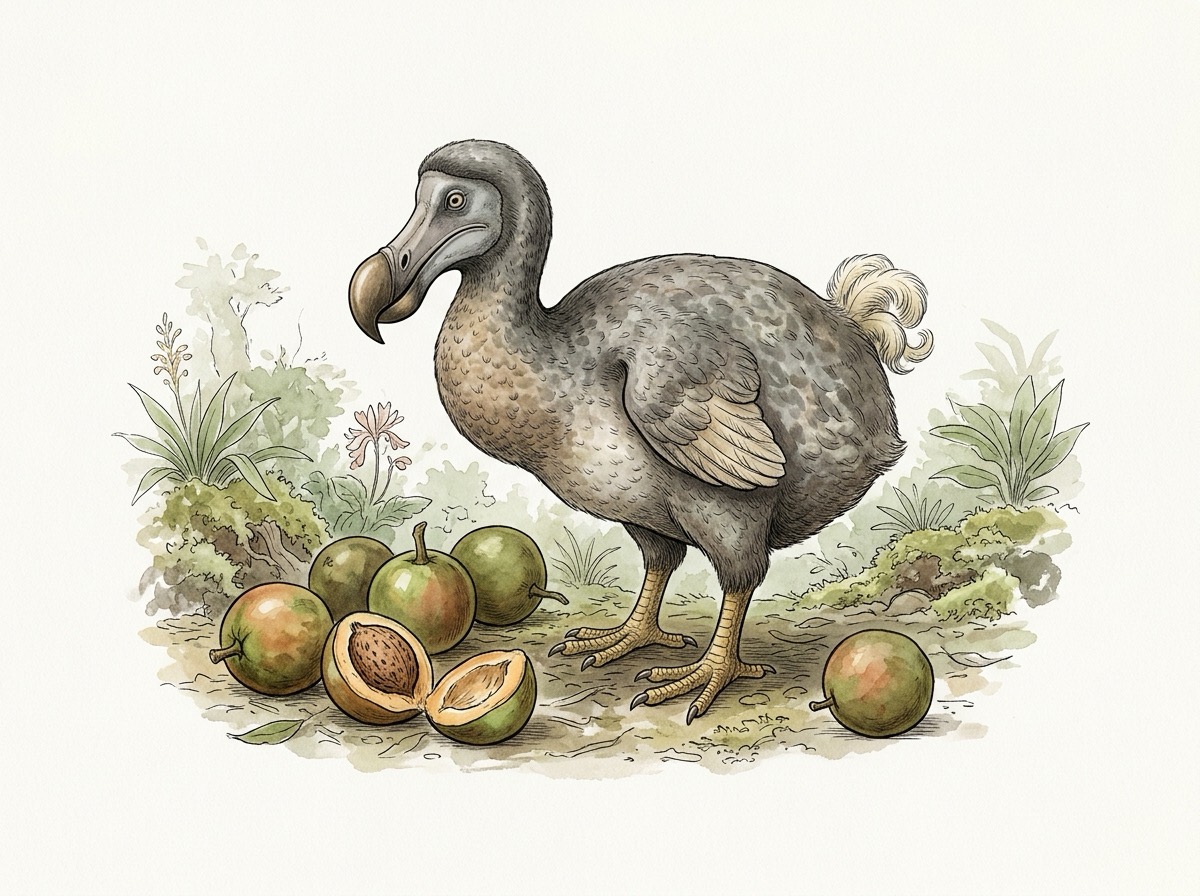
Tambalacoque
carried by Dodo
Lure A peach-like fruit around a thick, woody stone.
Ride The 1977 claim: the stone would sprout only after a dodo's gizzard ground it down, so the tree had not reproduced since the dodo died.
Disputed · evidence
A famous story that did not hold. Younger trees exist, and the seeds sprout without grinding. Giant tortoises and other lost animals of Mauritius probably ate the fruit too.
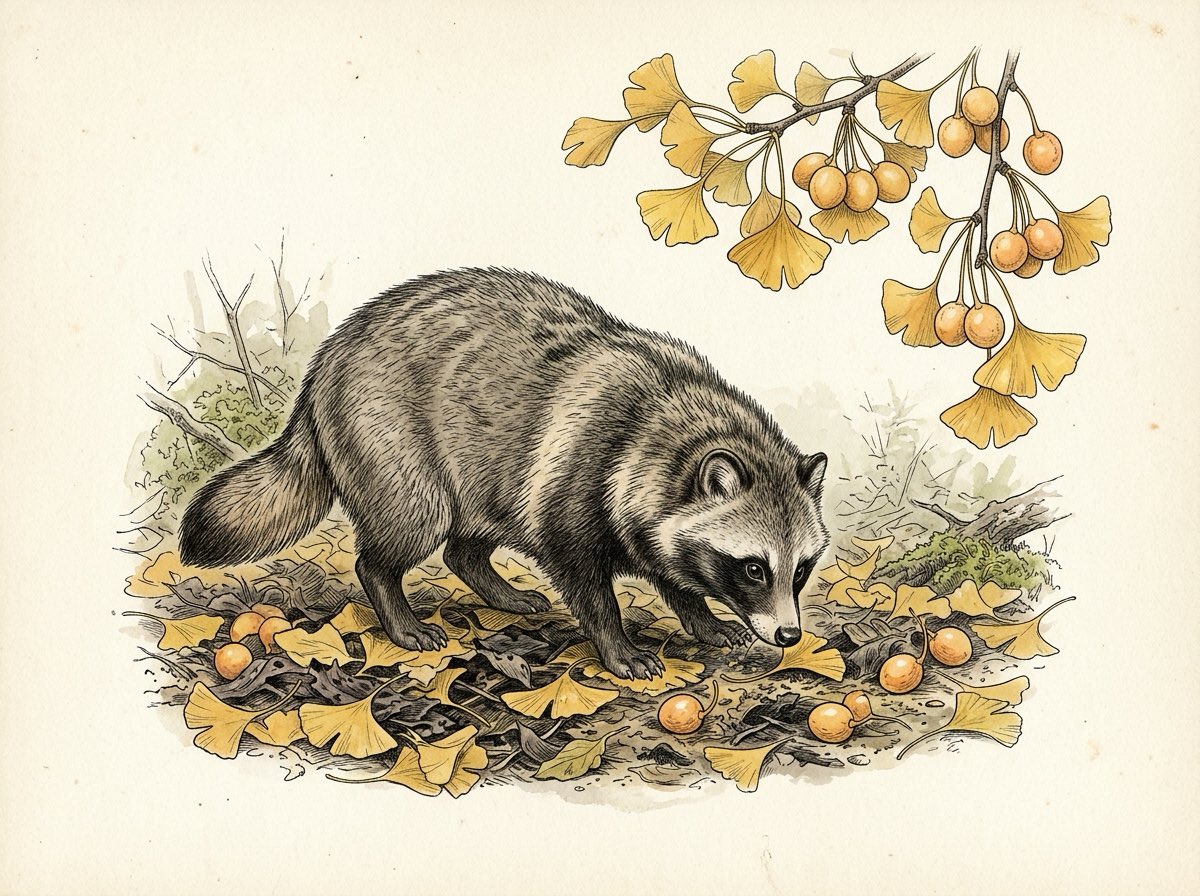
Ginkgo
carried by Unknown, long extinct
Lure A yellow, fleshy seed coat that smells of rancid butter, the scent of something a scavenger would like.
Ride In East Asia, civets and raccoon dogs eat the flesh and pass the seed. Who did it when ginkgos circled the globe is a guess.
A guess · evidence
The tree is 200 million years old and barely changed. Its original partner could have been a small dinosaur or an early mammal; nothing in the fossil record says which.
Where the big animal survives, you can watch the partnership work, and measure what the gut does to the seed.
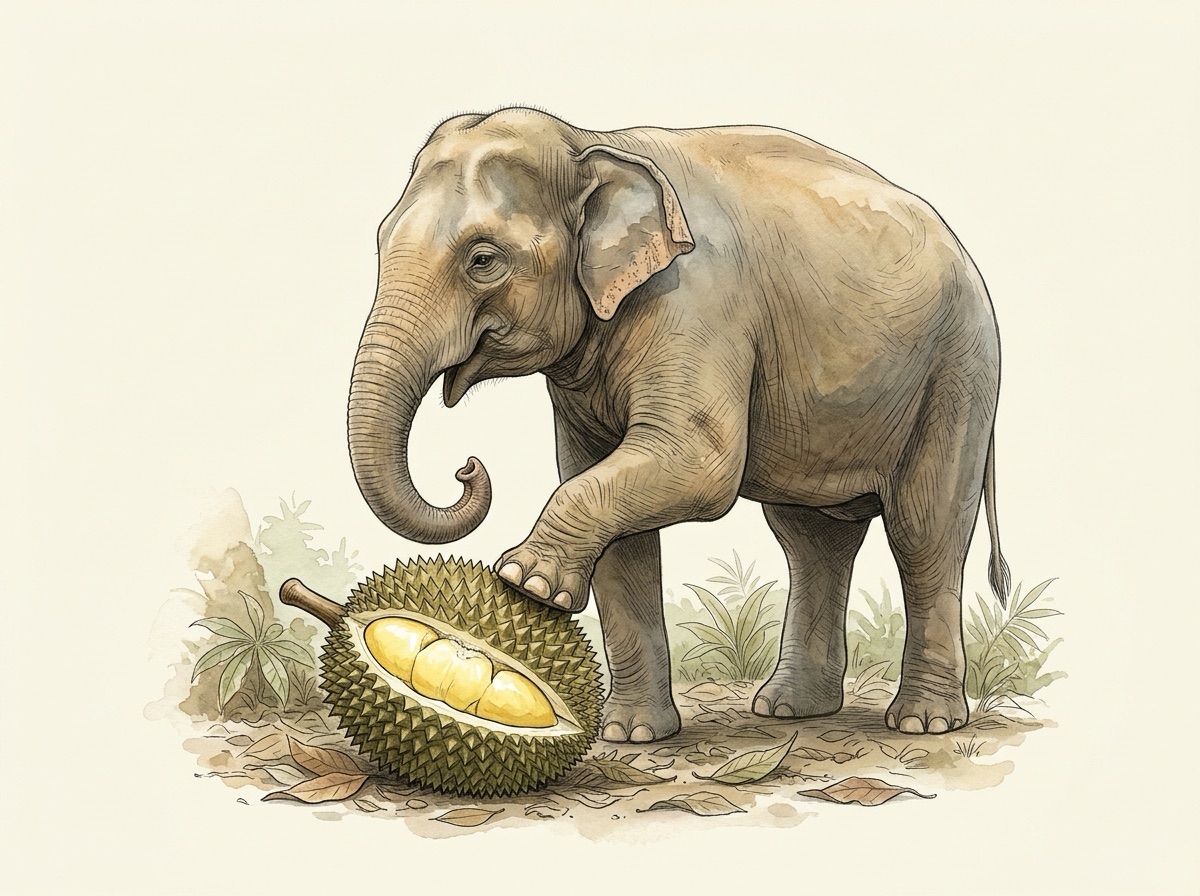
Durian
carried by Asian elephants, orangutans, sun bears
Lure A smell that carries hundreds of metres through still forest air, and rich custard around big seeds. The spikes keep small thieves out until it is ripe.
Ride Elephants swallow the seeds, sometimes whole fruits; orangutans carry fruit off and drop the seeds.
Tested or observed · evidence
Seen and filmed. The smell is the advertisement: a night-time signal for animals that find food by nose.
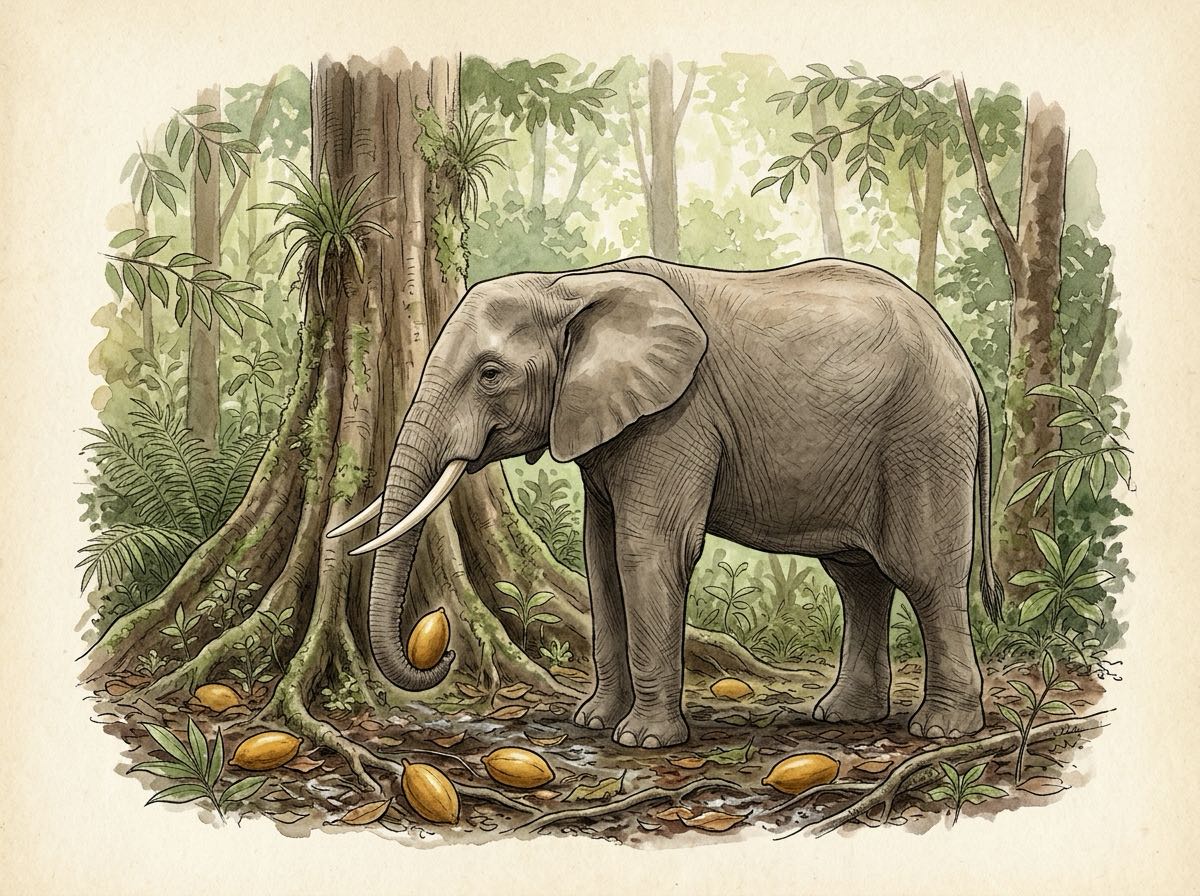
Forest desert date (Balanites wilsoniana)
carried by African forest elephant
Lure A fist-sized yellow fruit with oily pulp around a stone no other animal there can swallow.
Ride Through the elephant and out, kilometres away, in a ready-made bed of dung.
Tested or observed · evidence
In Kibale, Uganda, seeds that had passed through an elephant sprouted far more often and faster than seeds left under the tree. Where elephants were shot out, seedlings are scarce.
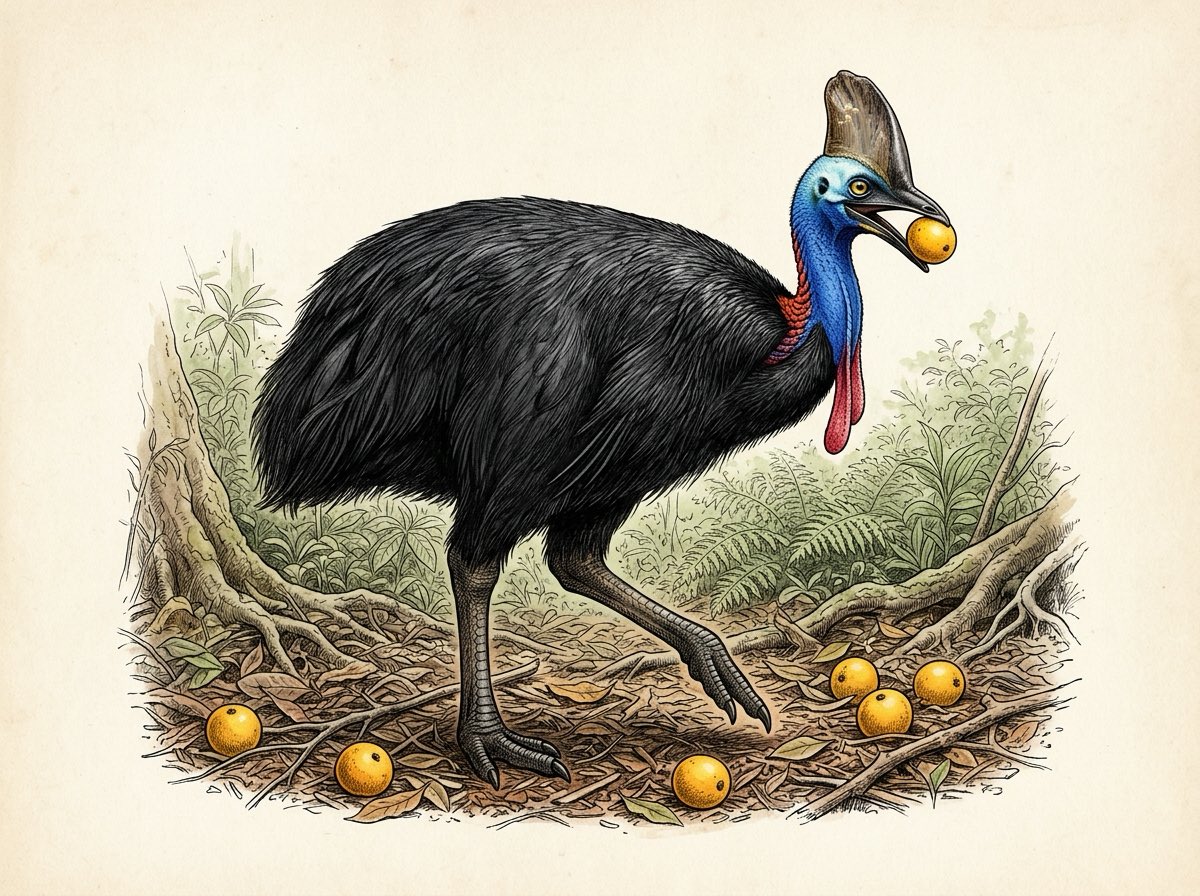
Ryparosa, a Daintree rainforest tree
carried by Southern cassowary
Lure Yellow-orange fruits dropped on the forest floor, with large seeds.
Ride Swallowed whole by a bird 1.7 m tall with a gentle gut; seeds leave hours later in a heap of fertiliser.
Tested or observed · evidence
Webber and Woodrow (2004): about 4% of untouched seeds sprouted, against about 92% of seeds taken from cassowary dung. Dozens of large-fruited Australian trees have no other carrier.
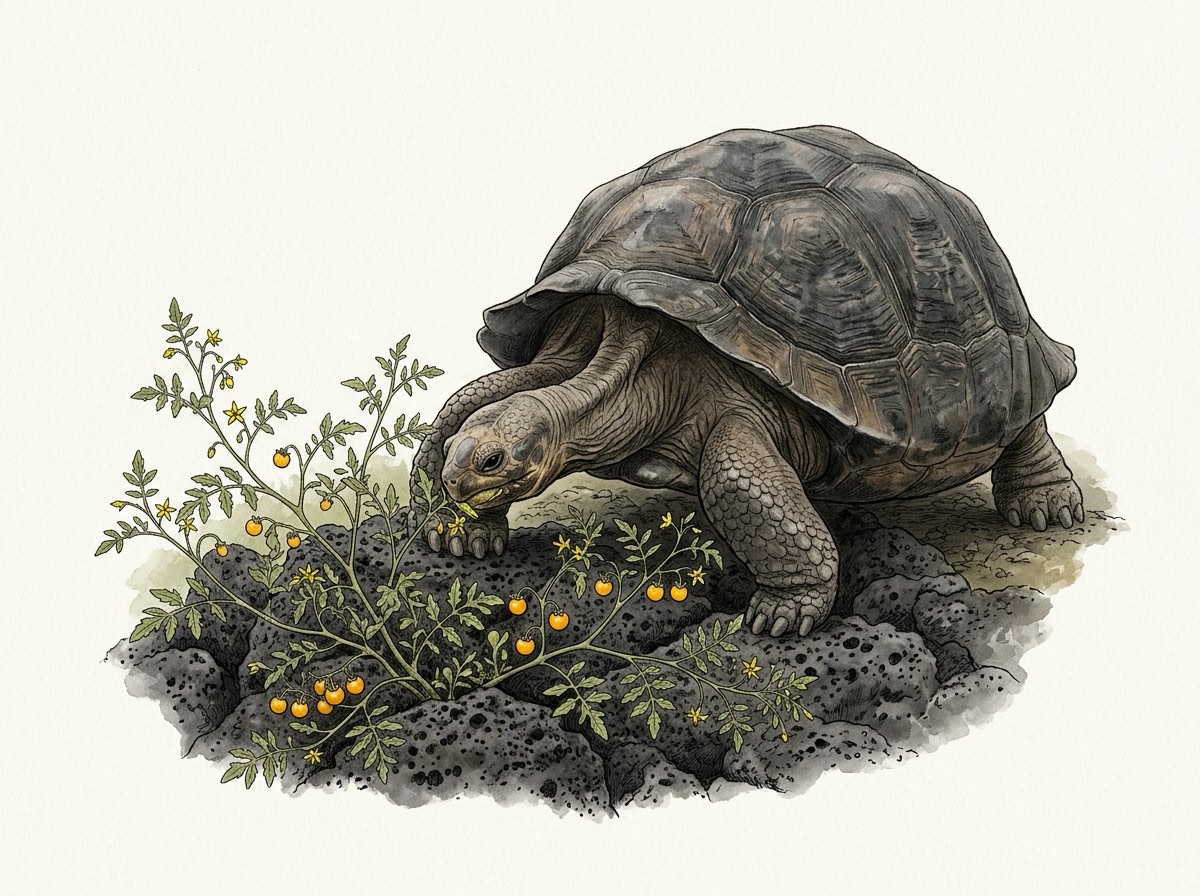
Galápagos tomato
carried by Giant tortoise
Lure Pea-sized yellow-orange tomatoes at tortoise height.
Ride One to three weeks inside a tortoise, which walks a long way in that time.
Tested or observed · evidence
Rick and Bowman (1961): the seeds hardly sprout untreated, and sprout well after a tortoise gut. They fed tomatoes to tortoises to show it.
Bird fruits are small, bright and scentless: birds see red well and smell poorly. Several of these plants also poison or burn the wrong customer.
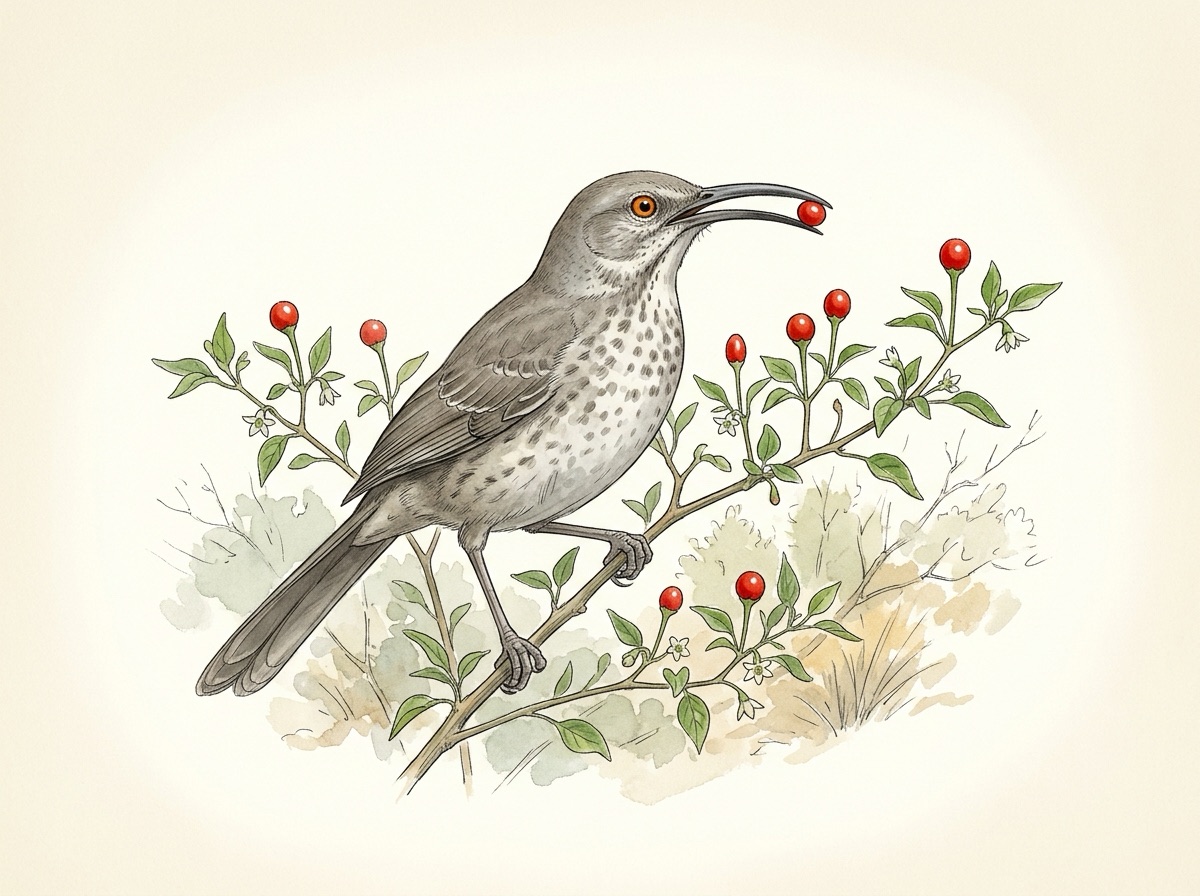
Wild chili
carried by Curve-billed thrasher
Lure Small, red, upright fruits. The burn is a filter: mammals feel capsaicin, birds do not.
Ride Birds swallow the fruit and pass the seeds whole, often under the shrubs where chilies grow best. A mouse would chew the seeds.
Tested or observed · evidence
Tewksbury and Nabhan (2001), in Arizona: thrashers took the hot fruits, packrats and cactus mice refused them, and seeds fed to mice did not sprout.
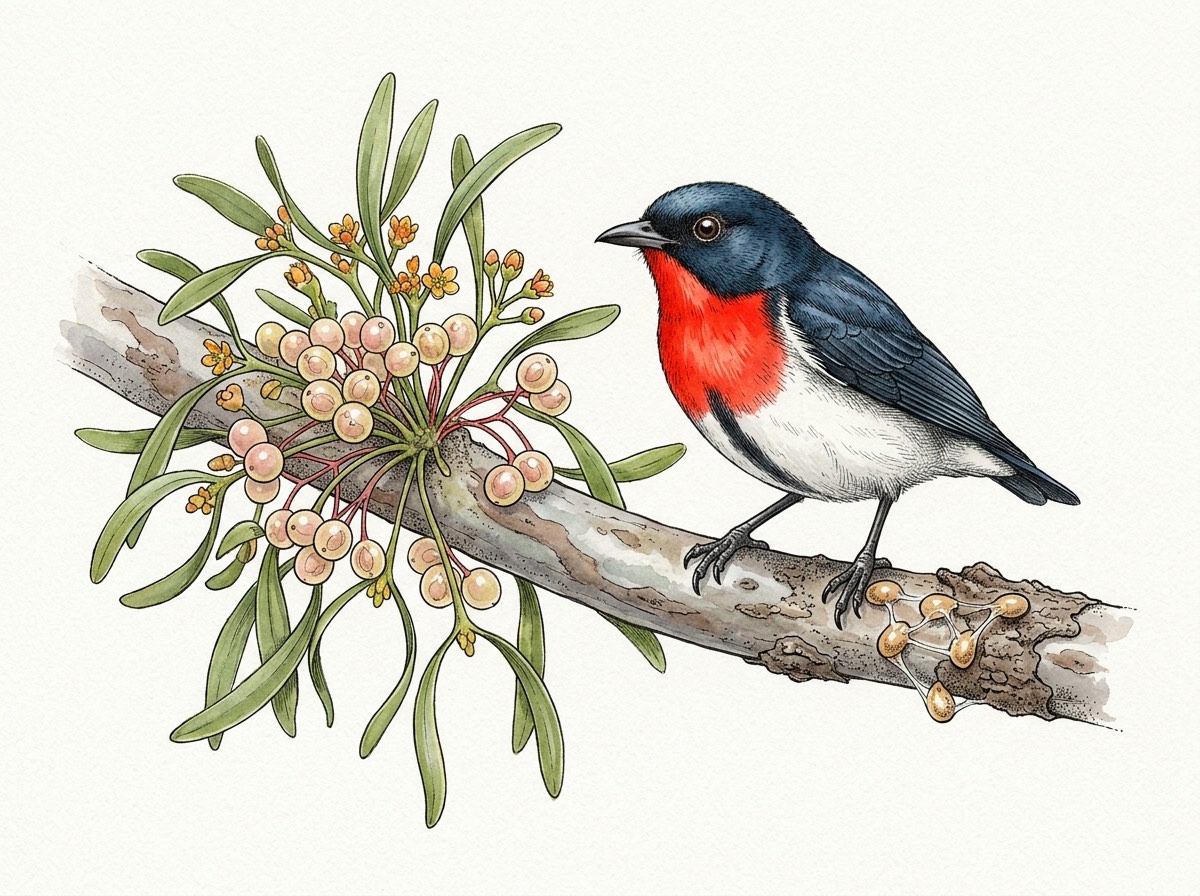
Mistletoe
carried by Mistletoebird
Lure A berry of sugar around a seed coated in glue.
Ride Through the bird in under half an hour. The seed comes out on a sticky string, and the bird turns sideways to wipe it onto the branch, the one place a mistletoe can grow.
Tested or observed · evidence
The bird has almost no gizzard, so the seed is never ground. Each needs the other across most of Australia.
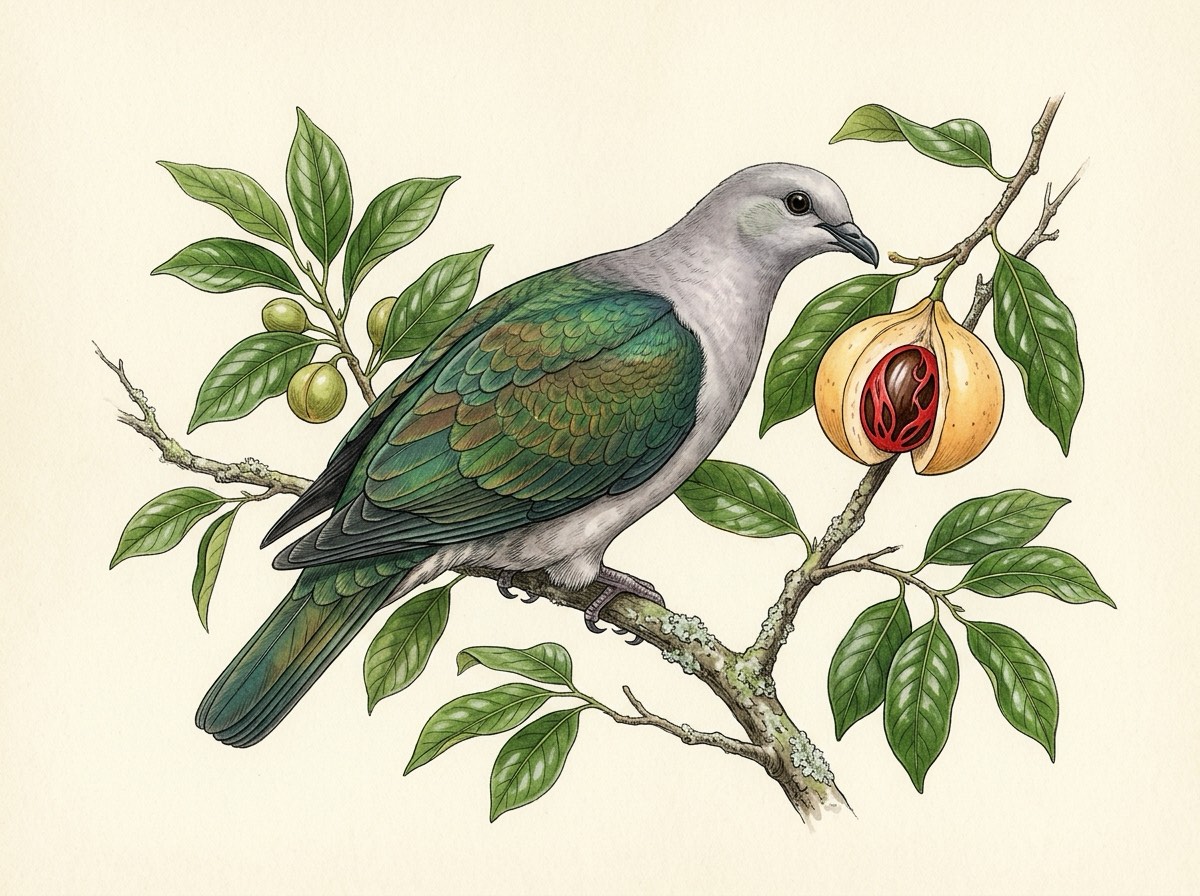
Nutmeg
carried by Imperial pigeons and hornbills
Lure The husk splits to show a glossy dark seed wrapped in a scarlet net of flesh, the spice mace. Red on black is a flag for birds.
Ride Swallowed whole by a bird with a stretchy gape; the mace is digested, the seed is coughed up or passed elsewhere in the forest.
Tested or observed · evidence
Imperial pigeons carried nutmeg between the Banda Islands. In Panama, toucans do the same for nutmeg's wild cousins.
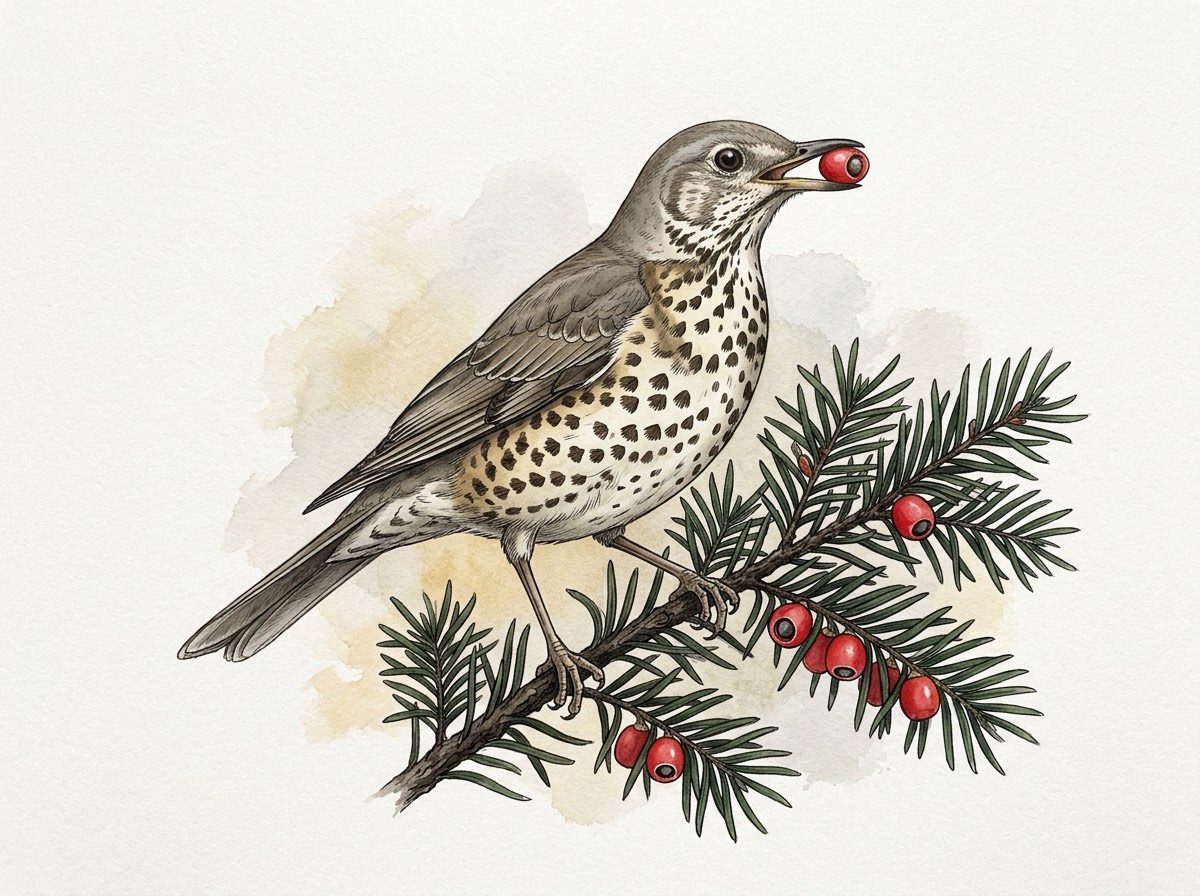
Yew
carried by Thrushes
Lure A soft red cup, sweet and harmless, around a seed that is poisonous, like the rest of the tree.
Ride The bird digests the cup and passes the seed untouched. An animal that chewed the seed would not do it twice.
Tested or observed · evidence
Reward and poison in one package: the tree pays the carrier and protects the cargo.
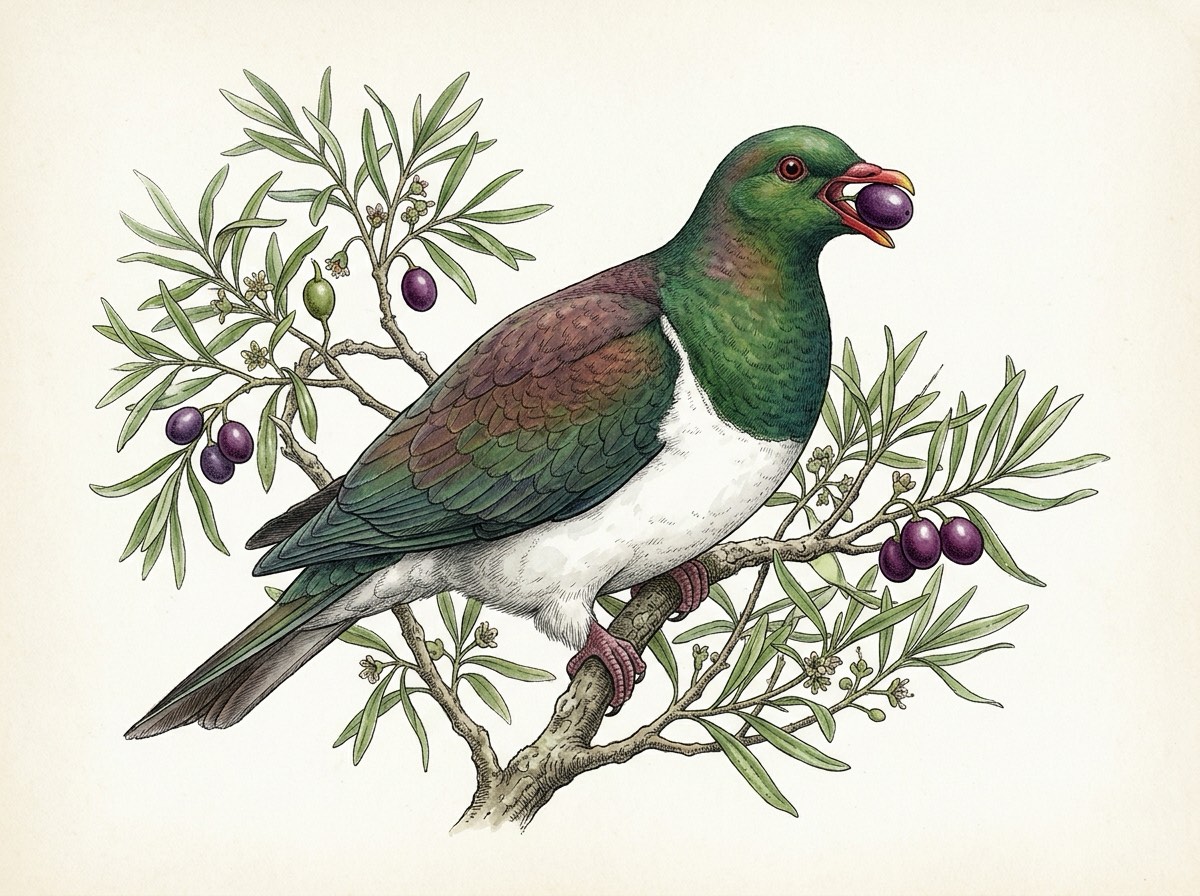
Tawa, taraire and karaka
carried by Kererū, the New Zealand pigeon
Lure Plum-sized dark or orange fruits, sized for birds much bigger than a songbird.
Ride Swallowed whole and flown across the valley.
Tested or observed · evidence
The moa and other big-gaped birds are gone. The kererū is the last common bird that can swallow these fruits, so the trees' future rides on one species.
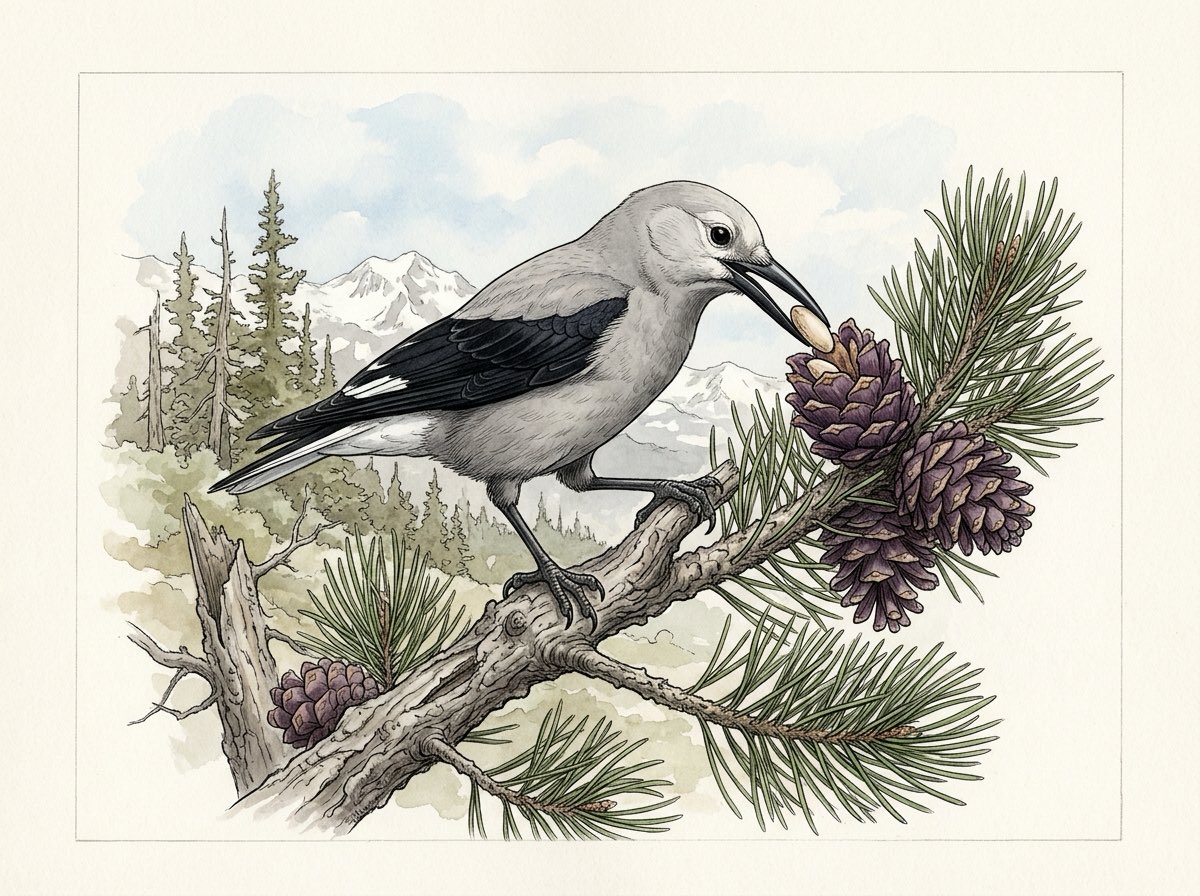
Whitebark pine (a cone, not a fruit)
carried by Clark's nutcracker
Lure Fat, wingless seeds in a cone that never opens by itself.
Ride The bird breaks the cone, carries up to a hundred seeds in a throat pouch, and buries tens of thousands a year. The ones it forgets become trees.
Tested or observed · evidence
Whitebark pines grow in clumps because they sprout from caches. The tree gave up wind; the bird has a pouch that fits the seed.
Mammal fruits are dull, strong-smelling and often locked in a shell that only one kind of tooth or hand can open.
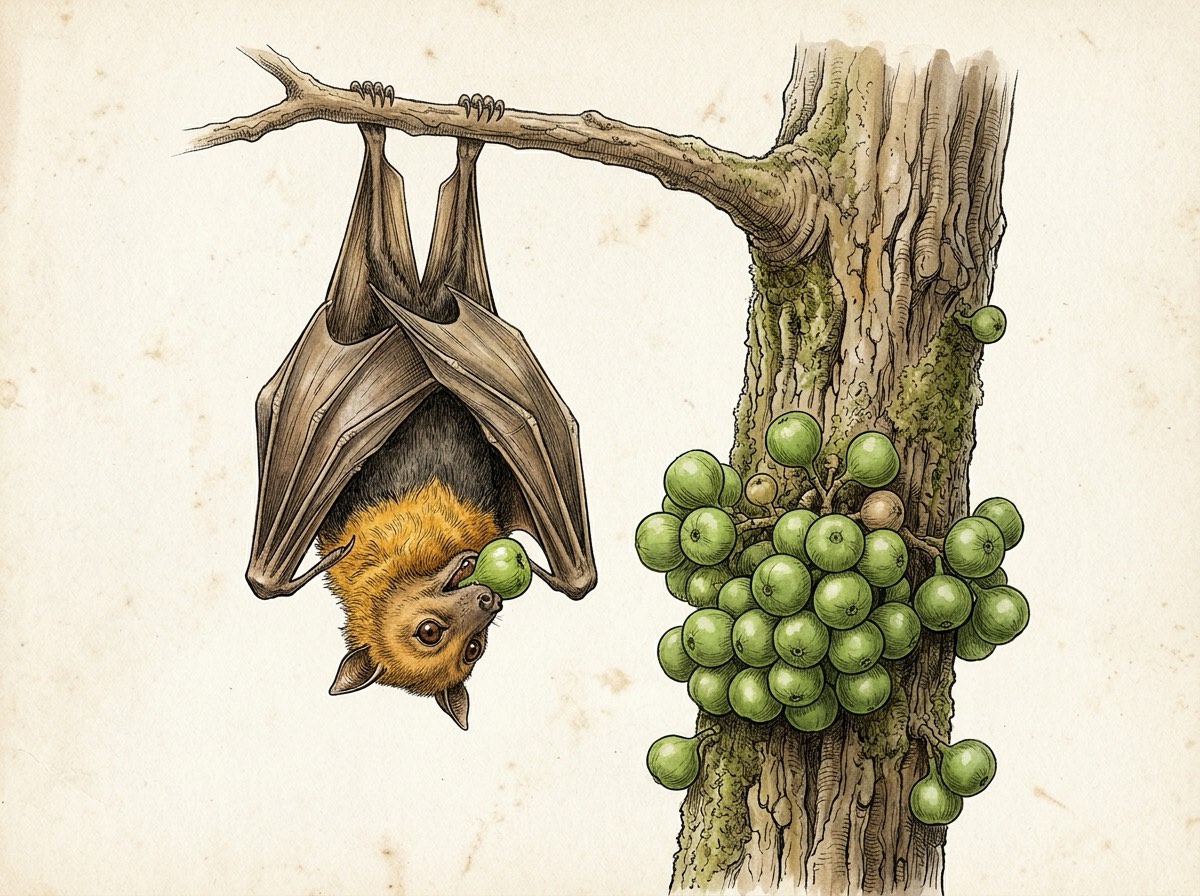
Figs
carried by Fruit bats
Lure Bat figs stay green, smell strongly at night and hang clear of the leaves. Bird figs, on other species, turn red and have no scent.
Ride A bat carries the fig to a feeding roost, sucks the juice, and drops seeds in flight across open ground: the first trees back on cleared land.
Tested or observed · evidence
The same genus builds two different fruits for two customers. Fig wasps pollinate; that is a separate partnership.
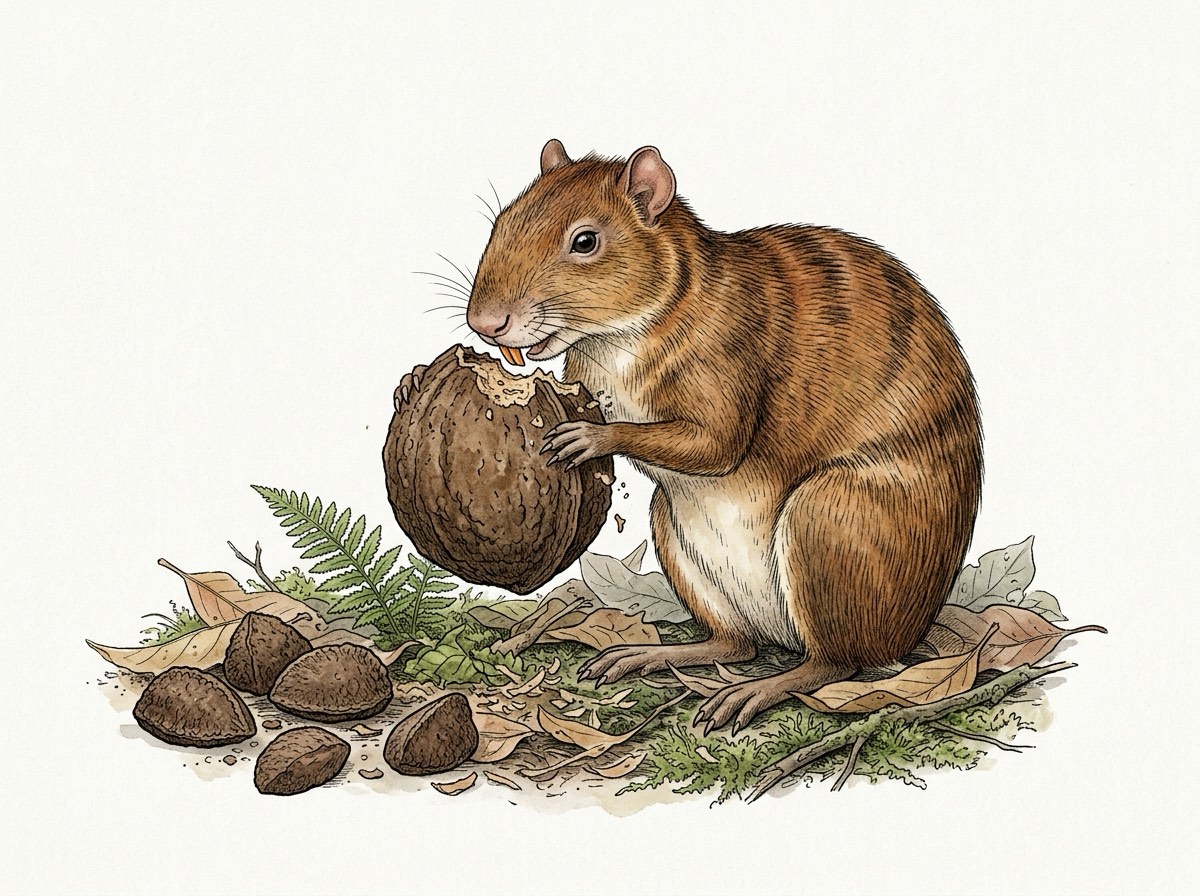
Brazil nut
carried by Agouti
Lure A wooden cannonball that falls 40 metres and stays shut, with a dozen rich seeds inside.
Ride The agouti is the one animal with teeth to gnaw it open. It eats a few seeds and buries the rest one by one for later, then forgets some.
Tested or observed · evidence
Without agoutis the seeds stay sealed until they rot. Bury-and-forget is how every Brazil nut tree got where it stands.
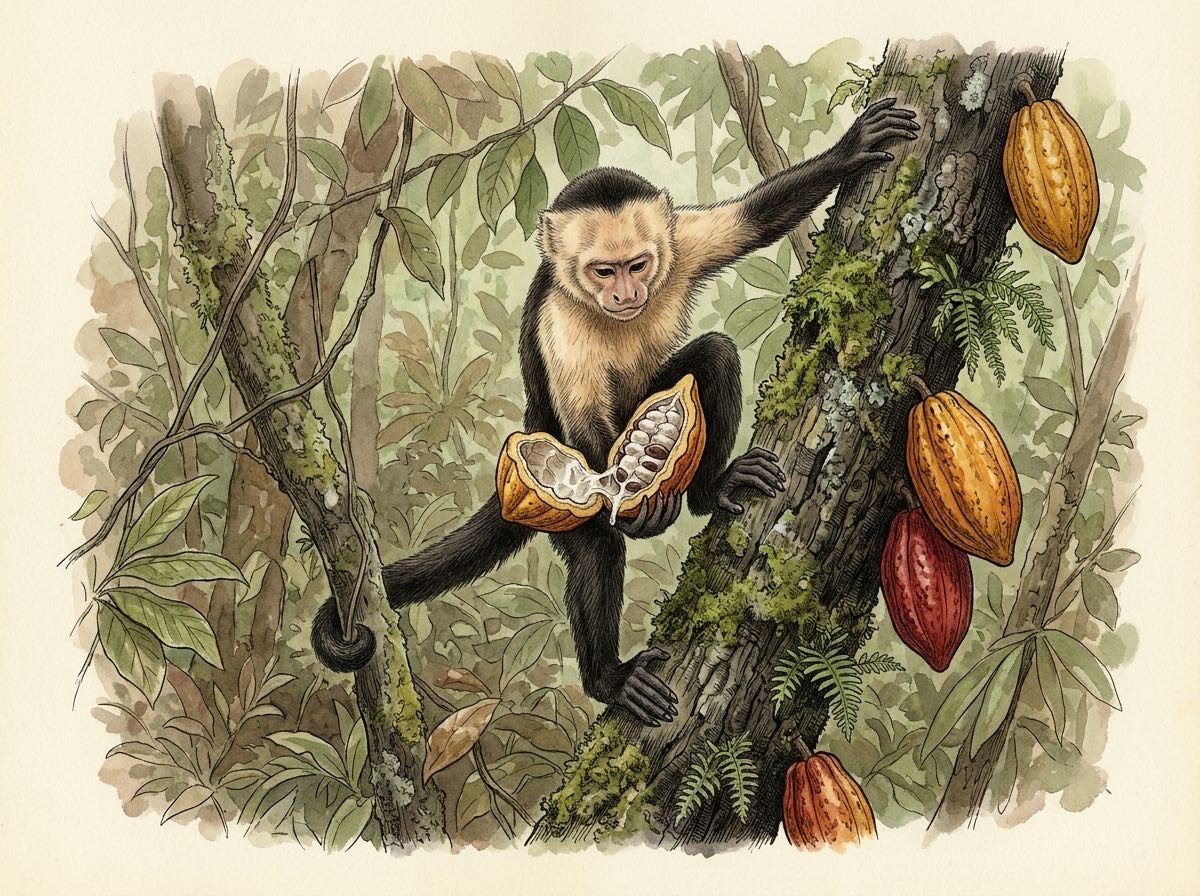
Cacao
carried by Monkeys and squirrels
Lure Pods on the trunk, within reach of climbers, that never drop or open. Inside: sweet white pulp around bitter seeds.
Ride A monkey bites the pod open, sucks the pulp and spits the bitter seeds as it moves through the trees.
Tested or observed · evidence
The bitterness that makes chocolate is the plant's way of making sure the seed is spat out, not chewed.
Slow guts carry seeds far, on islands with no mammals and in forest that floods.
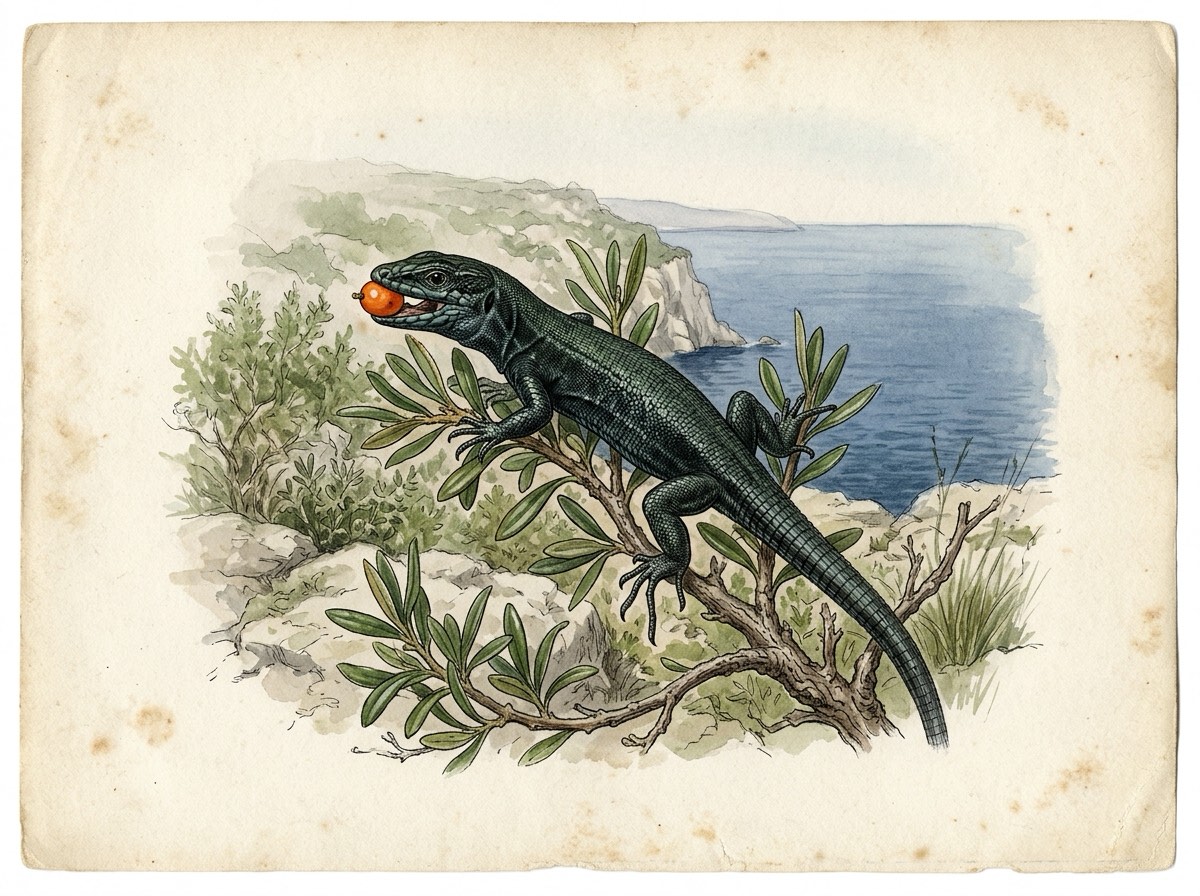
Daphne rodriguezii, a Menorcan shrub
carried by Lilford's wall lizard
Lure Small orange-red berries low on the bush.
Ride The lizard eats the berry and leaves the seed under another shrub, in the shade a seedling needs.
Tested or observed · evidence
Traveset and Riera (2005): on the islets that still have the lizard the shrub does well; on Menorca itself, where introduced predators wiped the lizard out, it is dying off.
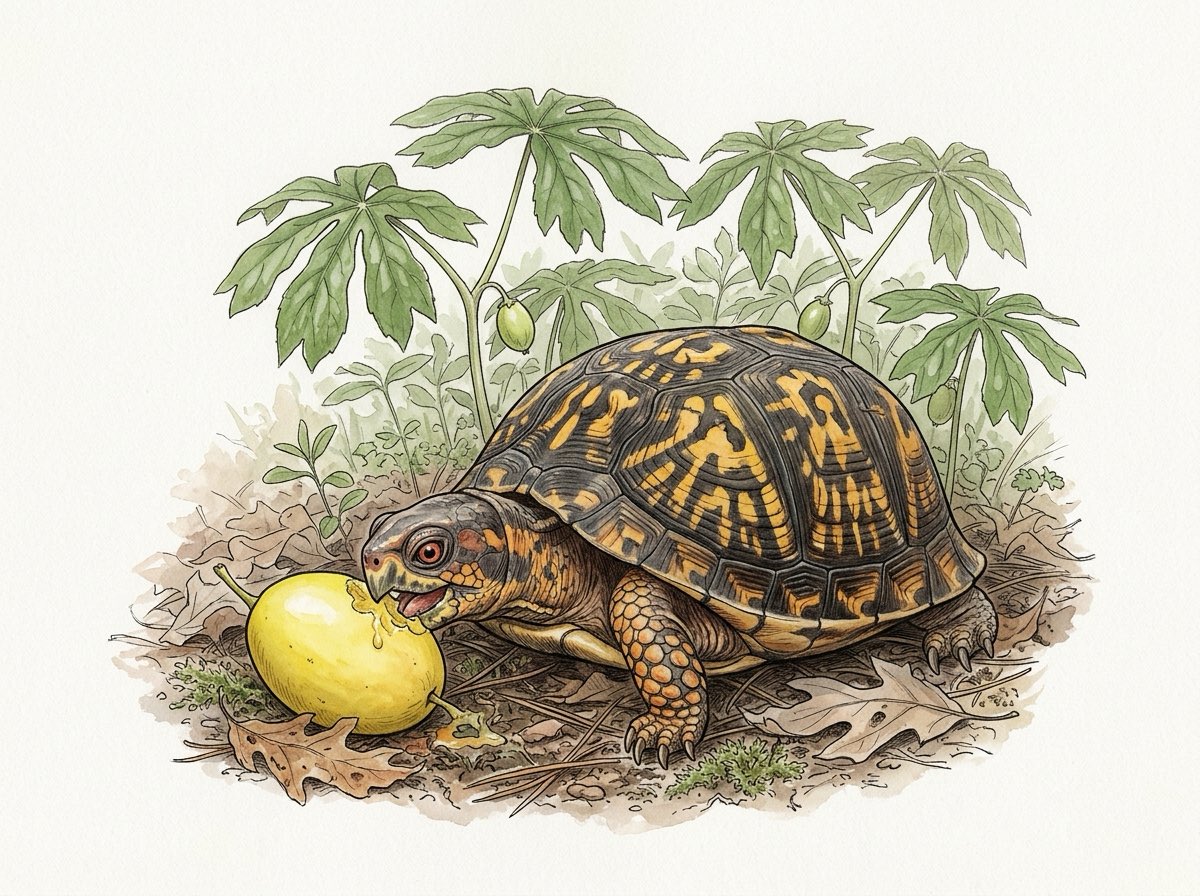
Mayapple
carried by Eastern box turtle
Lure One yellow, lemon-scented fruit that sags to the ground under an umbrella leaf, at turtle height. The rest of the plant is poisonous.
Ride Days inside a slow walker.
Tested or observed · evidence
Rust and Roth (1981): seeds from box turtles sprouted sooner and more often than untouched seeds.
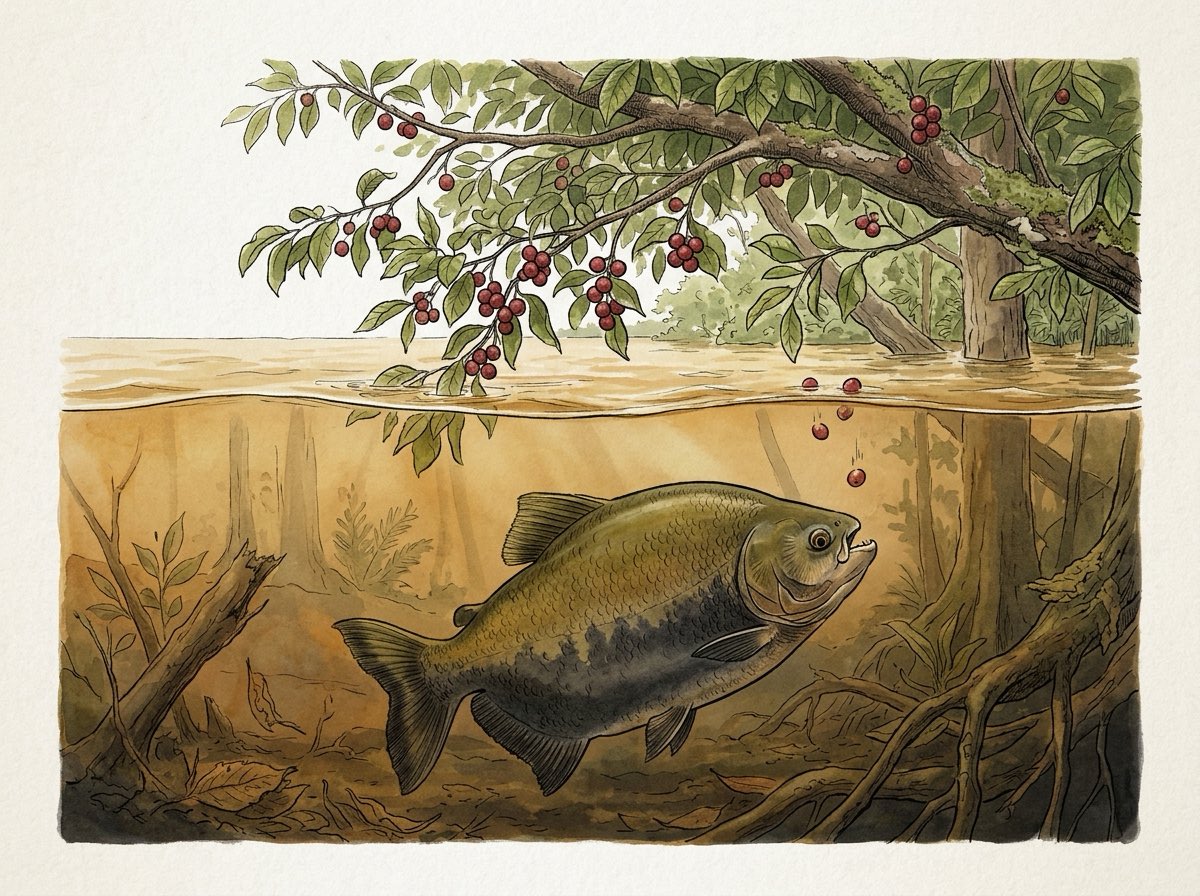
Amazon floodplain fruits
carried by Tambaqui, a fruit-eating fish
Lure Trees fruit when the river floods the forest, and drop their fruit in the water with a splash the fish listen for.
Ride The fish swims under the canopy, crushes some seeds with molar-like teeth and swallows the rest whole.
Tested or observed · evidence
Anderson and colleagues (2011) tracked tambaqui and estimated they carry seeds up to about 5 km, as far as any forest bird. Big old fish carry the most, and are the ones fished out.
Insects carry seeds, not fruits: the plant attaches a food parcel to the seed, or disguises it.
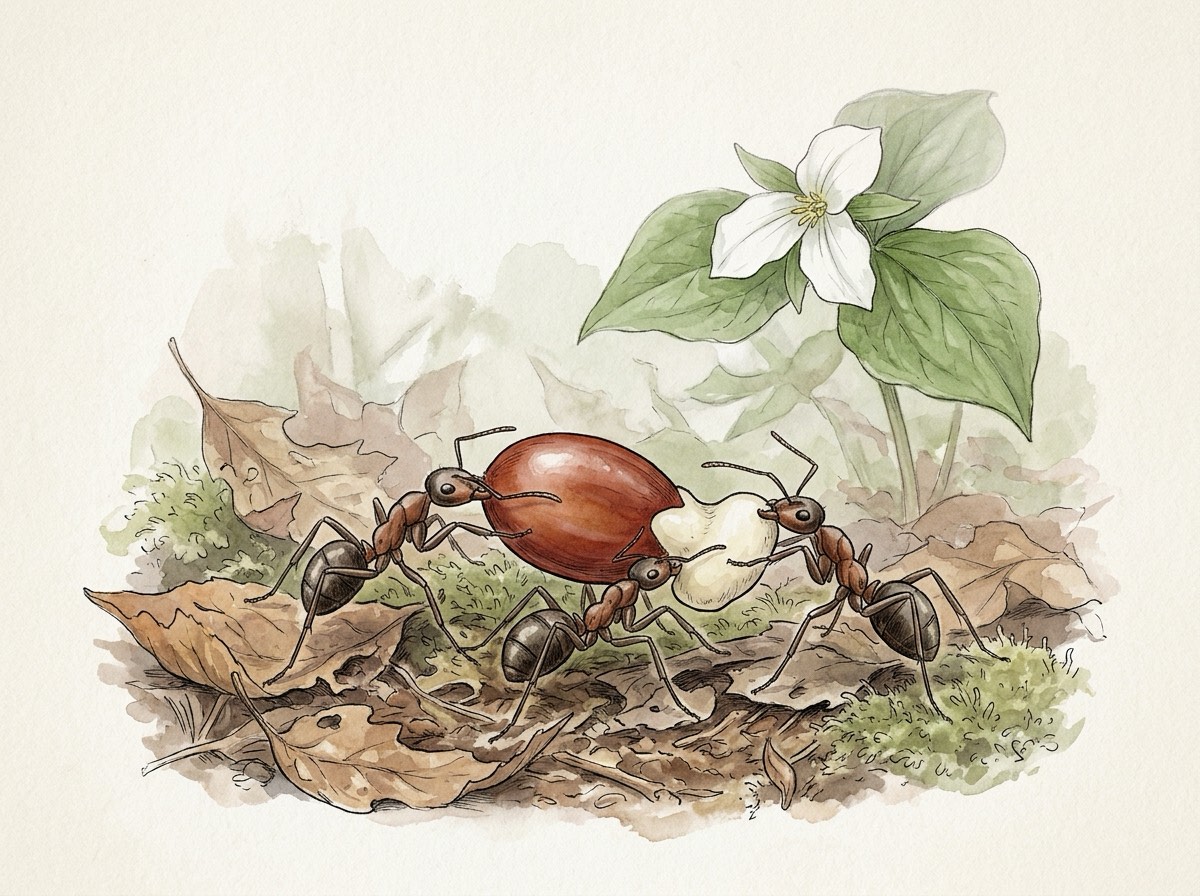
Trillium, bloodroot and violets
carried by Woodland ants
Lure Each seed carries a pale, fatty handle that smells to an ant like a dead insect.
Ride Ants haul the seed to the nest, feed the handle to their larvae and dump the seed on the rubbish heap: buried, fertilised and out of reach of mice.
Tested or observed · evidence
Ant dispersal has evolved separately over a hundred times and serves more than 11,000 plant species.
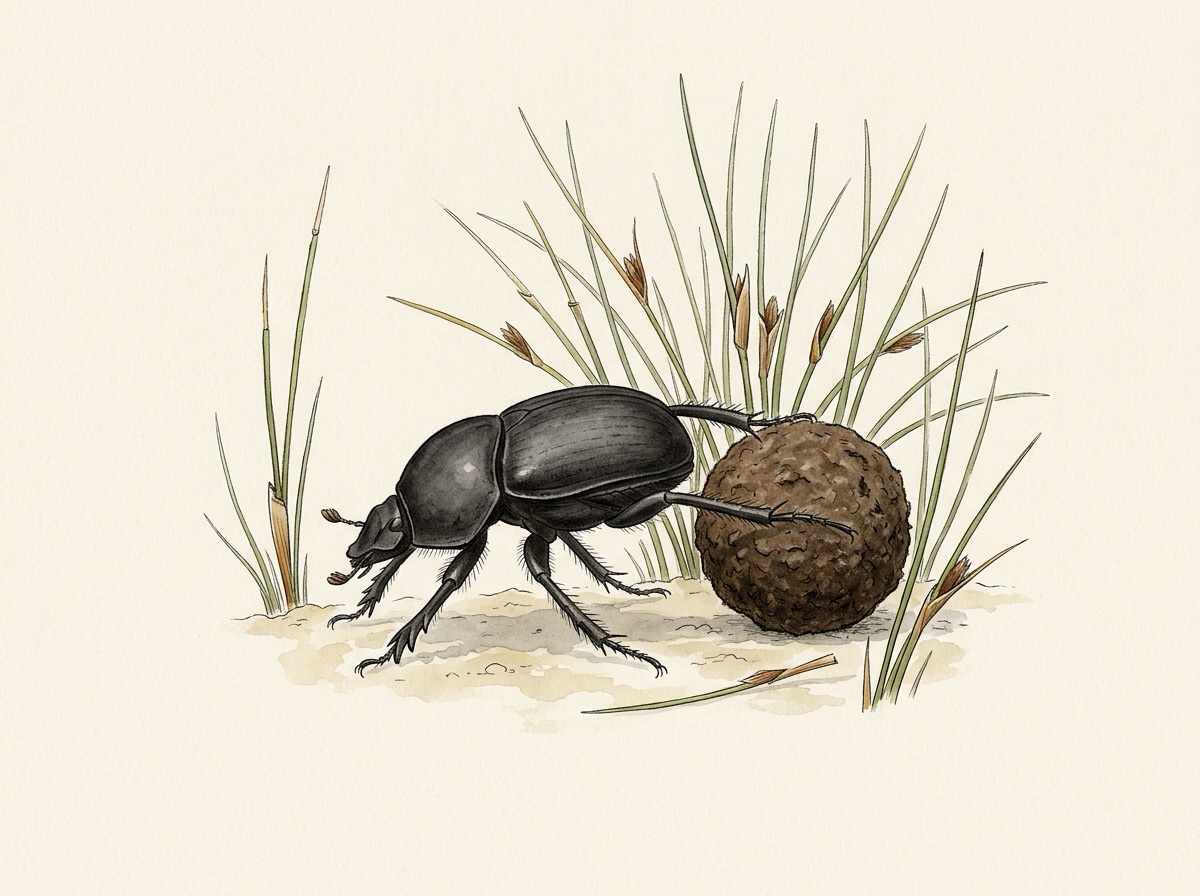
Ceratocaryum, a South African reed
carried by Dung beetles
Lure A fraud. The large brown nut looks and smells like an antelope dropping and offers nothing.
Ride A dung beetle rolls it away and buries it, safe from fire and rodents, then finds it cannot eat it or lay eggs in it.
Tested or observed · evidence
Midgley and colleagues (2015) filmed the beetles and matched the seed's scent chemicals to bontebok and eland dung.
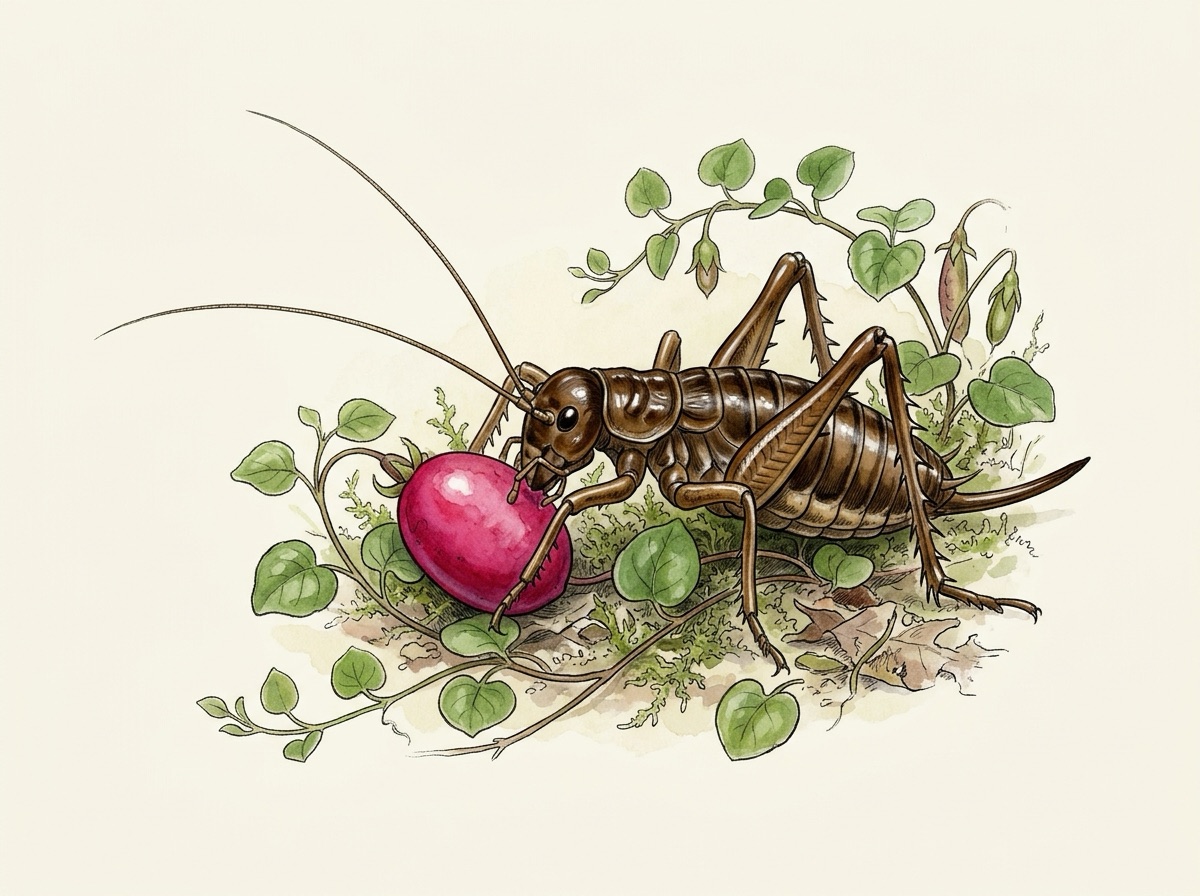
Creeping fuchsia and other small New Zealand berries
carried by Wētā, giant flightless crickets
Lure Low, small, pale or dull fruits on ground-hugging shrubs, in a land that had no mice.
Ride The wētā eats the berry at night and passes small seeds whole.
Disputed · evidence
Duthie and colleagues (2006) proposed wētā as stand-ins for small mammals. Later work found they destroy most seeds and carry few, so the partnership is in question.